
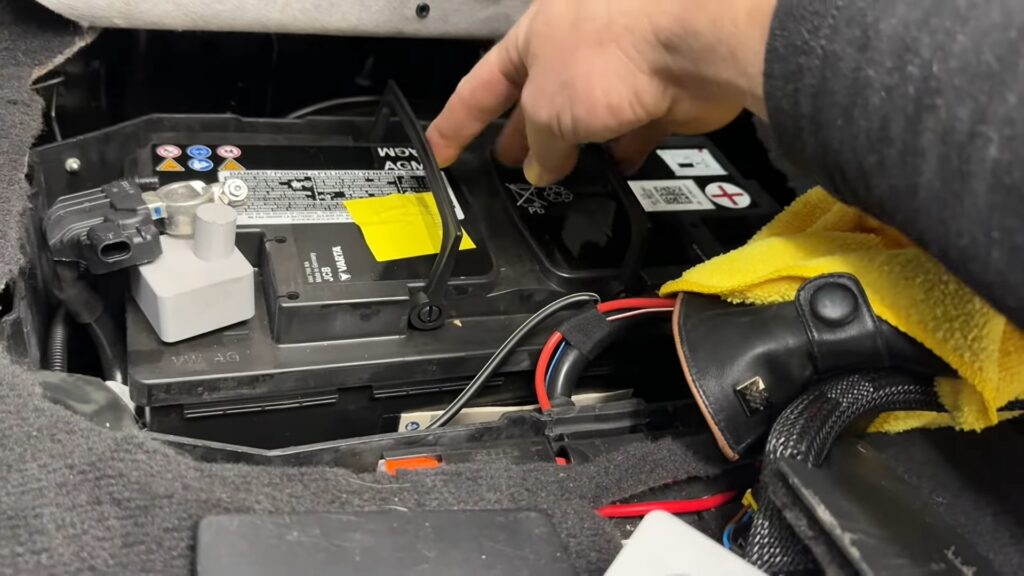
Synopsis:
Porsche battery issues often show up as starting problems or electrical faults before complete failure. Understanding when to replace the battery and how it affects vehicle systems helps prevent unexpected breakdowns and costly repairs.
Key Takeaways:
- Battery lifespan averages 3–5 years, often shorter in warm climates
- Warning signs include slow starts and electrical malfunctions
- Proper replacement requires testing and system registration
- Delays can lead to alternator strain and system faults
- Routine checks help avoid unexpected breakdowns
Your Porsche won’t start. The infotainment screen flickers. Warning lights appear for no obvious reason. Many of these issues trace back to one component: the battery. At All German Auto in Escondido, we see this pattern regularly with the Porsche vehicles we service. A failing battery in a modern Porsche is not just an inconvenience. It can affect sensors, safety systems, and performance electronics all at once.
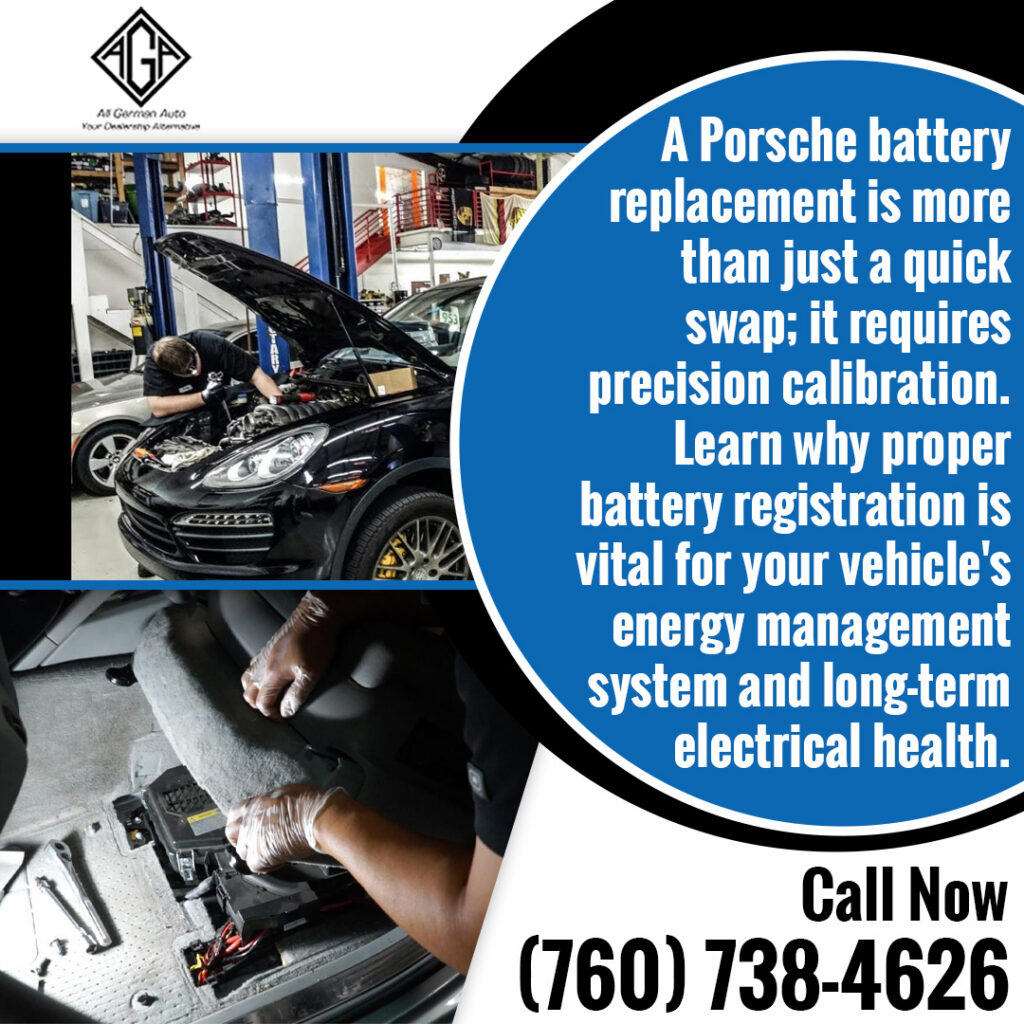
You may be searching for Porsche auto repair near you and dealing with battery-related issues without realizing it. We cover how long a Porsche battery lasts, the warning signs to act on, why replacement requires brand-specific knowledge, and how to stay ahead of costly surprises.
How Long Does a Porsche Battery Last?
A Porsche battery typically lasts 3 to 5 years, though real-world conditions often shorten that window. Driving habits, climate, and electrical load all play a role.
Factors That Affect Battery Life
Short trips and stop-and-go driving drain batteries faster than they can recharge. Your alternator needs sustained running time to restore a full charge after each start. Frequent short trips work against that process.
Heat accelerates battery wear. Escondido summers regularly push temperatures above 90°F, which speeds up the chemical activity inside the battery and shortens its service life. According to the Car Care Council, extreme heat is one of the primary contributors to premature battery failure in passenger vehicles.
High electrical demand adds to the strain. Modern Porsche models run advanced driver assistance systems, high-resolution infotainment displays, ambient sensors, and performance monitoring hardware. All of that draws continuous power, even when the vehicle is parked.
Age and maintenance history round out the picture. A battery that has never been load-tested is far more likely to fail without warning than one that gets checked regularly during scheduled service.
Signs Your Porsche Battery Is Failing
Common Warning Signs You Should Not Ignore
A slow engine crank is often the first sign of battery trouble. If your engine takes longer to turn over, the battery may not be supplying enough voltage to the starter.
Watch for these additional indicators:
- Dashboard warning lights that appear or behave unpredictably
- Electrical issues such as slow power windows, infotainment resets, or sensor errors
- A clicking sound during ignition indicates insufficient charge
- Intermittent starting problems, where the vehicle starts one day but not the next
Why Porsche Electrical Systems Make Early Detection Critical
Modern Porsche models depend on stable voltage across all systems. The engine control unit, stability systems, and driver assistance features all rely on the same battery. When the voltage drops, multiple systems can fail at once.
At our shop, a trained Porsche mechanic uses brand-specific diagnostic tools to identify early battery failure. Addressing the issue early helps prevent fault codes, repeat visits, and deeper electrical problems that take longer to diagnose.
Why Porsche Battery Replacement Requires Specialized Expertise
Porsche Batteries Are Not Like Standard Car Batteries
This is not a part you replace at a general auto parts store. Porsche vehicles use advanced energy management systems that require recalibration after battery replacement. The battery works as part of the vehicle’s electronic network rather than as a simple power source.
Most late-model Porsche vehicles require battery registration, also known as coding. Without this step, the charging system continues to treat the new battery like the old one. This can lead to overcharging, shorter battery life, and recurring electrical faults.
The Right Process: Diagnostics Before Replacement
We begin every battery service with accurate testing. Our technicians load-test the battery, check alternator output, and inspect the charging system before recommending replacement. This approach prevents replacing a battery when the real issue comes from the alternator or related components.
Once confirmed, the replacement battery must meet OEM specifications. This includes size, terminal configuration, cold cranking amps, and reserve capacity. After installation, we complete battery registration using manufacturer-level diagnostic tools. This allows the vehicle’s system to adjust charging patterns correctly.
What Can Go Wrong Without a Specialist
Not all Porsche auto repair shops have the tools required to register a new battery correctly. Without that step:
- Electrical faults and warning lights may remain active
- The charging system may overwork the battery
- Intermittent starting issues may continue
Skipping proper registration often leads to repeat visits and added repair time.
What Happens If You Delay Battery Replacement?
Waiting until a Porsche battery completely fails puts the entire electrical system at risk. Here is what can happen when replacement is put off:
- A weak battery forces the alternator to work harder, which can lead to alternator failure
- Voltage instability triggers repeated system errors that are expensive to diagnose
- A failing battery can corrupt onboard control modules, creating repair costs far beyond the battery itself
The Southern California climate shortens this timeline compared to cooler regions. A battery that might reach five years elsewhere can reach the end of its reliable life in three years here.
How Porsche Battery Service Fits Into Your Maintenance Schedule
Battery Testing as Part of Every Service Visit
Many Porsche owners stay current with their oil change intervals, brake fluid, and filters, but overlook the battery until it fails. The battery deserves the same attention as any other scheduled maintenance item. Just as a Porsche oil change protects long-term engine health, monitoring the battery protects the electrical foundation that every other system depends on.
During factory-scheduled maintenance visits, our technicians load-test your battery and assess its remaining capacity. If it is within 12 to 18 months of the typical replacement window, taking care of it during that visit avoids the disruption of an emergency breakdown later.
The table below shows how battery replacement fits alongside other common Porsche service intervals:
| Maintenance Item | Typical Interval | Risk If Neglected |
| Oil Change | 10,000 miles / 1 year | Engine wear, oil breakdown |
| Battery Replacement | 3–5 years | Starting failure, electrical faults |
| Cabin Air Filter | 20,000 miles / 2 years | Reduced HVAC airflow |
| Brake Fluid Flush | 2 years | Reduced braking effectiveness |
| Coolant Service | 4 years / 60,000 miles | Overheating risk |
How Often Should You Replace Your Porsche Battery?
Replace your Porsche battery every 3 to 5 years, or sooner if testing shows it is no longer holding a full charge under load.
When to Replace Before the 3-Year Mark
Consider earlier replacement if any of the following apply:
- Frequent short trips under 10 minutes are part of your daily routine
- You regularly use high-draw accessories such as seat heaters, premium audio, or phone charging
- Your vehicle is older, with a higher overall electrical demand
- You have noticed any of the warning signs listed above
Preventative Replacement vs Emergency Failure
Replacing the battery on your schedule is always better than replacing it after a breakdown. The service cost is identical whether it happens during a planned visit or on the shoulder of the freeway with a tow truck on the way. The experience is very different.
Choosing the Right Porsche Mechanic in Escondido
What to Ask a Porsche Repair Shop
Not every shop that handles European cars is equipped for Porsche battery replacement. When evaluating a shop, ask:
- Do your technicians have brand-specific Porsche training?
- Does your shop use OEM or OEM-equivalent parts with manufacturer-level diagnostic tools?
- Can you perform battery registration and recalibration after installation?
- Do you test the alternator and charging system as part of the service?
The answers reveal whether a shop truly understands Porsche engineering or is simply swapping parts.
Why Working With a German Auto Specialist Makes a Difference
Porsche vehicles are precision-engineered machines. The electrical architecture, energy management systems, and onboard electronics are more tightly integrated than in most other brands. A general shop serving a wide range of makes may not have the software access or brand-specific training needed to complete battery registration correctly.
A shop that works on German vehicles exclusively builds deeper familiarity with Porsche-specific procedures, known failure patterns, and correct OEM part specifications. At All German Auto, that focused approach translates to more accurate first-visit diagnoses and fewer return trips for the same issue.
The Advantage of Local Porsche Knowledge
A shop that services Porsche vehicles regularly understands how conditions in this area affect battery life. Shorter daily commutes, stop-and-go traffic on the I-15 corridor, and North County San Diego’s sustained heat all accelerate battery wear here versus cooler climates. When you are searching for Porsche auto repair near you in Escondido, you will find faster, more accurate diagnostics from our team that sees these local patterns every day.
Why North County Porsche Owners Choose a Dedicated German Auto Shop
Battery failure is the single most common reason drivers call for roadside help. AAA data identifies battery failure as one of the top four causes of roadside assistance calls annually, accounting for approximately 30% of all vehicle breakdowns. For Porsche owners, this matters more than for most. Many late-model Porsches cannot be safely jump-started without the correct procedures, which often means waiting for a flatbed instead of a quick roadside fix.
Our Porsche technician, Erick Talamantes, graduated from UTI in 2018 and has focused on high-line German vehicles since. He handles Porsche battery testing, replacement, and registration as a regular part of his daily work. We use OEM or OEM-equivalent parts and carry the manufacturer-level diagnostic tools required to complete registration correctly after every battery swap. That is what separates a qualified Porsche mechanic from a general shop that occasionally works on European cars.
Beyond battery and charging system service, our Porsche services include engine diagnostics, brake repair, cooling system service, factory-scheduled maintenance at 20k, 40k, 60k, 80k, and 100k miles, oil changes, starter and alternator service, and pre-purchase inspections. See our Porsche service page for the full list of models we cover, from the 911 and Boxster to the Cayenne and Panamera.

Frequently Asked Questions
How much does a Porsche battery replacement cost?
Costs vary by model, battery type, and the level of diagnostics required. Porsche vehicles often need battery registration and system checks, which affect total pricing. At All German Auto, we provide accurate estimates after testing your battery and charging system. Compared to a dealership, an independent Porsche auto repair shop like ours typically offers the same technical process with more flexible pricing.
Can I replace a Porsche battery myself?
Physically, yes. However, most modern Porsche models require battery registration using manufacturer-level diagnostic tools. Without this step, the charging system will not adjust to the new battery. This can lead to reduced battery life and recurring electrical issues. For this reason, we do not recommend DIY replacement for late-model Porsche vehicles.
Does a Porsche battery need to be coded after replacement?
Yes. Most modern Porsche vehicles require battery coding or registration after installation. This process updates the vehicle’s energy management system so it charges the battery correctly. Skipping this step can cause warning lights, charging problems, and ongoing electrical faults.
Work with a Porsche Mechanic Who Understands Battery and Electrical Systems
A Porsche battery typically lasts 3 to 5 years. Southern California’s climate and frequent short trips often shorten that window further. Watch for a slow engine crank, flickering electronics, or unexpected dashboard warnings. These are early signals worth acting on before they compound into larger electrical problems.
When replacement is needed, the process must be done correctly: the right OEM-spec battery, installed with proper registration using Porsche-compatible diagnostic tools. Skipping any part of that process creates new problems rather than solving the original one.
Our team at All German Auto handles Porsche battery service from initial diagnostics through registration. If your Porsche is showing any of the signs above, or if it has been three or more years since your last battery check, contact us before a small issue turns into a roadside emergency.
If you are looking for a reliable Porsche mechanic in Escondido, CA, call us at (760) 738-4626 or email us at [email protected]. We serve Porsche owners in Escondido, San Marcos, Vista, Valley Center, and throughout North County San Diego.

