Synopsis
Porsche diagnostics translate complex vehicle data into clear, actionable insight about system health and performance. This process helps owners identify issues early, understand true causes, and plan maintenance with confidence.
Key Takeaways
- Evaluates system communication beyond fault codes
- Uses manufacturer-level diagnostic equipment
- Identifies intermittent and early-stage issues
- Supports preventive maintenance planning
- Reduces guesswork in repair decisions
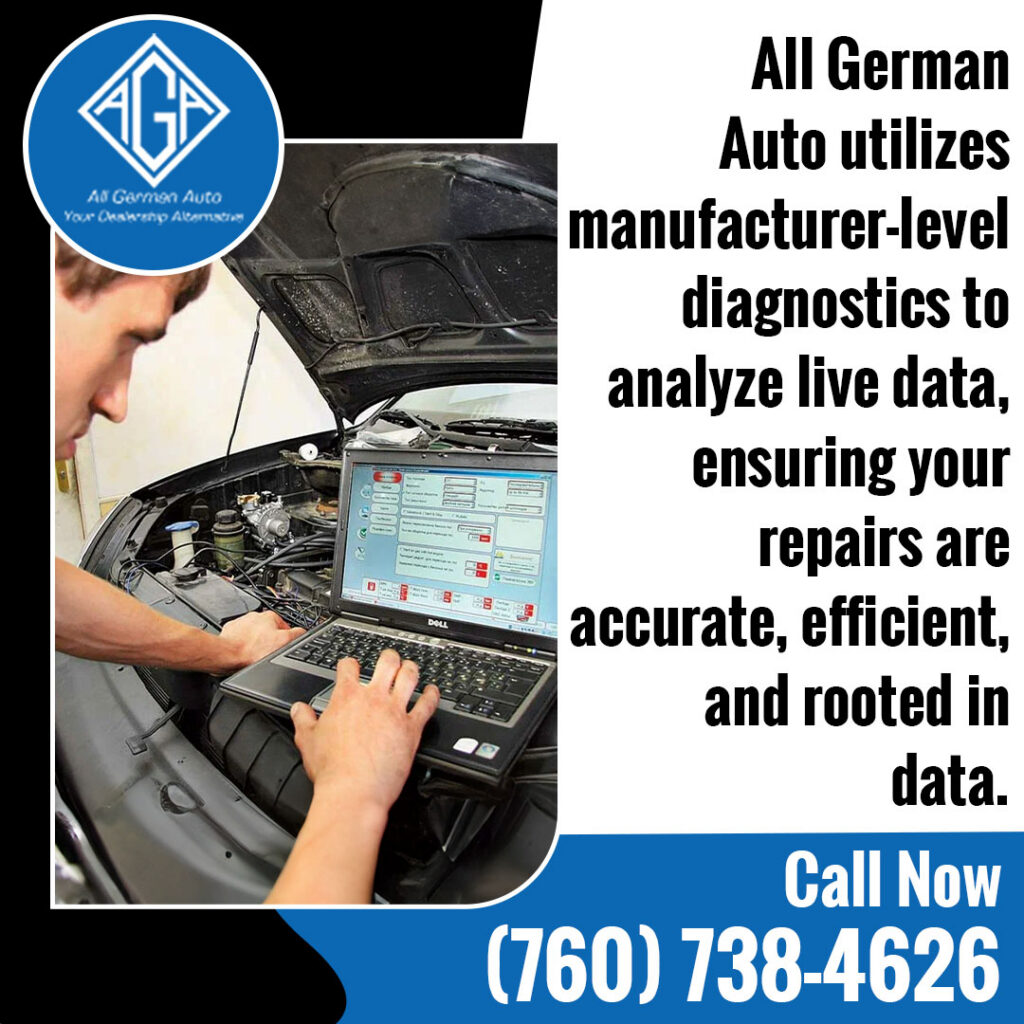
Modern Porsche vehicles rely on complex electronic systems working alongside precision mechanical components. These systems constantly monitor performance, safety, and drivability, often detecting changes long before problems feel obvious behind the wheel. A diagnostic evaluation turns that stored data into useful information, helping owners understand what their vehicle is reporting and why it matters.
All German Auto is a Porsche auto repair shop in Escondido that performs Porsche diagnostics using manufacturer-level equipment designed for these vehicles. This process looks beyond basic fault codes to evaluate system communication, sensor accuracy, and operating patterns. We explain what you can expect from a Porsche diagnostic and how it supports informed ownership decisions.
Why Porsche Diagnostics Differ From Standard Vehicle Scans
Your Porsche relies on interconnected electronic modules controlling engine performance, transmission operation, suspension damping, and safety systems. Generic OBD-II scanners read only basic fault codes. They cannot access manufacturer-specific data stored within Porsche control modules.
Our Porsche computer diagnostics interpret how systems communicate, not just what codes appear. This understanding determines whether repairs address root causes or merely symptoms.
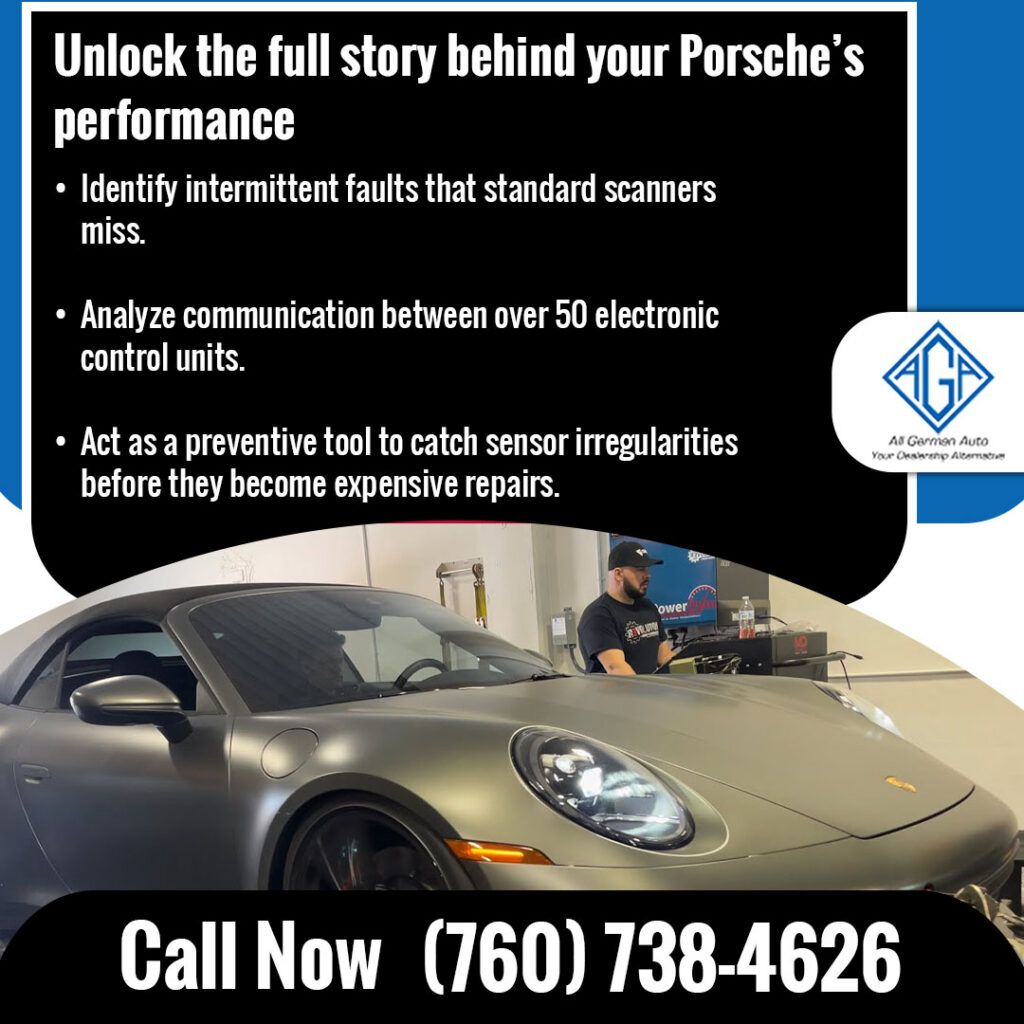
Modern vehicles contain numerous electronic control units managing different functions. According to the National Highway Traffic Safety Administration, contemporary passenger vehicles commonly incorporate around 50 electronic control units (ECUs). Performance-oriented Porsche models often exceed this due to advanced handling and safety features. Our diagnostics examine how these modules share information and respond to driving conditions.
We see this distinction matter daily. A warning light might point toward a specific sensor. However, our Porsche computer diagnostics reveal whether electrical supply, wiring integrity, or actual sensor failure causes the problem.
What Happens During Porsche Computer Diagnostics
Beyond Basic Code Reading
Standard scan tools access the generic fault codes that any modern vehicle generates. Porsche computer diagnostics reach deeper into manufacturer-specific data, including adaptation values, live sensor readings, and system readiness status.
Our equipment uses factory-approved diagnostic tools providing dealership-level capabilities. This matters because Porsche distributes diagnostic information across multiple control modules. Engine data exists separately from transmission information and body control systems. Incomplete scanning misses critical context.
How Porsche Electronic Systems Interact
Your vehicle uses Controller Area Network (CAN) bus technology, enabling constant module communication. The engine module shares throttle position with the transmission. Anti-lock braking systems inform traction control about individual wheel speeds. Suspension controllers adjust damping rates based on steering input and vehicle speed.
When communication pathways fail or become corrupted, seemingly random drivability problems emerge. Our diagnostic process traces these data flows. We identify where information stops reaching its destination.
Common Situations Requiring Porsche Diagnostics
Dashboard Warnings and Performance Concerns
Warning lights trigger most diagnostic appointments at our facility. Check engine indicators, ABS alerts, or airbag warnings; each signals specific system faults. Other owners notice drivability changes without illuminated warnings: rough idle conditions, hesitation during acceleration, or unexpected transmission behavior.
We examine both stored fault codes and the operating conditions that triggered them. This complete picture separates true failures from temporary anomalies requiring no repair.
Problems That Appear Then Disappear
Some Porsche issues occur too briefly to store permanent fault codes. You might experience momentary power reduction, a single abrupt shift, or brief steering feedback changes. These frustrate owners because symptoms vanish before reaching Porsche auto repair shops.
We record live data during test drives, capturing intermittent problems that static testing misses. This documentation reveals patterns invisible to conventional diagnostic approaches.
Inspection Before Service or Purchase
Smart owners schedule diagnostics ahead of major maintenance or when evaluating vehicle purchases. Pre-service diagnostics identify components approaching wear limits before failure occurs. Our pre-purchase inspections uncover hidden concerns that visual examinations cannot reveal.
Both applications provide information supporting better decisions about timing and budgeting repairs.
Systems Examined During Complete Diagnostics
Engine Control and Fuel Management
We analyze parameters including fuel mixture adjustments, ignition timing advance, and throttle response patterns. Our diagnostics reveal whether your engine maintains proper air-fuel ratios, if timing advances appropriately under load, and how variable valve systems operate across RPM ranges.
Porsche powertrains maintain tight tolerances. Small deviations from target specifications indicate developing concerns before affecting everyday driving.
Transmission Operation and Drivetrain Function
Porsche transmissions continuously exchange data with engine control modules. Whether equipped with PDK dual-clutch or Tiptronic automatic transmission, we evaluate shift timing, clutch engagement patterns, fluid operating temperatures, and torque converter lockup function.
All-wheel drive systems in applicable models receive a thorough evaluation. Transfer cases and rear differentials require precise electronic control, distributing power effectively through acceleration and cornering.
Suspension Response and Steering Systems
Porsche Active Suspension Management adjusts damping characteristics continuously. We verify the accuracy of sensors feeding these systems, valve response executing damping changes, and overall system calibration. Power steering operation, wheel alignment measurements, and stability control function also receive evaluation.
These integrated systems influence both ride comfort and handling precision. Our diagnostic information confirms whether components perform within manufacturer specifications.
Electrical Networks and Sensor Accuracy
Current Porsche models incorporate hundreds of sensors monitoring parameters from brake pad thickness to cabin air quality. We test sensor electrical characteristics, signal quality, and response accuracy.
Network integrity evaluation examines CAN bus wiring and module connection quality. Corrosion, wiring damage, or module failures disrupt communication networks, causing seemingly unrelated system malfunctions. Our Porsche mechanic team identifies these issues through comprehensive electrical system diagnostics.
| System Category | Evaluated Components | Detected Issues |
| Engine Control | Fuel delivery, ignition systems, emissions | Misfire conditions, mixture deviations, sensor faults |
| Transmission Management | Shift execution, clutch operation, temperatures | Harsh engagement, slip conditions, data errors |
| Suspension Control | Damping adjustment, position sensors, calibration | Inconsistent ride quality, system warnings, calibration drift |
| Network Communication | Bus wiring, module connections, signal integrity | Intermittent warnings, multiple system faults |
Supporting Preventive Maintenance Through Diagnostics
Preventive diagnostic evaluation can reduce unexpected repair expenses. This matters especially for Porsche vehicles, where replacement components carry premium costs.
Diagnostic evaluation during routine intervals, like your Porsche oil change appointment, catches developing concerns while intervention remains straightforward. A sensor showing early failure patterns costs considerably less than consequential damage from ignoring warning signs.
Transmission adaptation irregularities should be corrected before affecting internal components.
This proactive approach works alongside our scheduled maintenance, keeping your Porsche reliable without excessive service visits.
Why Porsche Diagnostics Require Specialized Knowledge
Brand-Specific Equipment Requirements
General automotive shops lack Porsche diagnostic equipment and training in interpreting results. Factory-equivalent diagnostic systems require specialized hardware and ongoing software subscriptions. We maintain this technology because our focus centers exclusively on German vehicle service.
However, equipment alone provides limited value. Technicians must understand how Porsche engineers designed system interactions. Reading stored codes without this context leads nowhere.
Experience Recognizing Patterns
Our team at All German Auto, including Porsche specialist Erick Talamantes, identifies patterns in German vehicles. We distinguish which fault codes indicate genuine problems versus those appearing after routine procedures like battery replacement.
We recognize which sensor readings fall within acceptable ranges and which predict imminent failures. This experience prevents misdiagnosis and unnecessary component replacement. Technicians lacking a Porsche-specific background might replace functioning parts based on an incomplete assessment.
Selecting a qualified Porsche mechanic with brand expertise distinguishes accurate diagnosis from trial-and-error approaches common at general facilities.
Understanding Your Diagnostic Results
We explain findings clearly without unnecessary technical terminology. Our diagnostic documentation prioritizes concerns by safety impact, reliability risk, and cost implications. You receive a straightforward assessment distinguishing items requiring immediate attention from those safely deferred.
Our team at All German Auto views diagnostics as information tools, not sales opportunities. Some vehicles’ complete evaluation shows no action required. Others reveal maintenance opportunities you schedule according to your personal budget and timeline. Final decisions rest with you based on the accurate information we provide.
Local Conditions Affecting Porsche Ownership in Escondido
Escondido’s warm climate and driving patterns create specific vehicle challenges. Short trips prevent engines from reaching full operating temperatures. Heavy traffic on Interstate 15 stresses transmissions and cooling systems differently than sustained highway operation.
Annual diagnostics help local Porsche owners identify wear patterns before causing unexpected failures. We regularly see heat-related cooling system issues and carbon buildup from short-distance driving patterns common throughout North County. Diagnostic data reveals these problems, while they remain manageable.
When searching for Porsche auto repair near you, finding a shop that understands regional conditions matters. Understanding your vehicle’s actual condition beats guessing about maintenance needs.
Frequently Asked Questions
What systems receive evaluation during Porsche diagnostics?
We assess all electronic control modules, sensor networks, communication systems, and stored diagnostic information. Evaluation covers engine management, transmission control, suspension operation, steering systems, braking function, and electrical networks.
Do diagnostics replace scheduled maintenance?
No. Diagnostic evaluation identifies current conditions and emerging concerns. Scheduled services like Porsche oil change intervals and filter replacements follow separate timing based on mileage and calendar intervals.
When should I schedule a diagnostic evaluation?
Arrange diagnostics when warning indicators illuminate, performance characteristics change, or annually as a preventive assessment. Pre-purchase diagnostics help evaluate used vehicles before purchase decisions.
Can diagnostics detect problems before warning lights activate?
Yes. Many developing concerns appear in diagnostic information before triggering dashboard indicators. Early identification often prevents costlier repairs through timely intervention.
How long does a complete evaluation require?
Thorough diagnostics typically need 60-90 minutes, depending on system complexity and whether test driving is necessary for documenting intermittent concerns.
What if diagnostics show no problems?
We confirm that systems operate within specifications. Finding no issues means no unnecessary service recommendations, giving you confidence about vehicle condition.
Working With a Porsche Mechanic Matters for Accurate Diagnostics
Your Porsche constantly monitors operational parameters and maintains detailed performance records. Diagnostic evaluation translates this data into an actionable understanding of vehicle health. Whether addressing warning indicators or planning maintenance timing, thorough diagnostics provide foundations for sound ownership decisions.
We developed our diagnostic approach around Porsche-specific knowledge and factory-equivalent technology. Our objective centers on helping you understand vehicle requirements without pressure or unneeded recommendations.
Schedule a diagnostic evaluation at All German Auto so that an experienced Porsche mechanic in Escondido, CA. Contact us at (760) 738-4626 or email us at [email protected]. We serve Porsche owners throughout North County, including San Marcos, Vista, Valley Center, and Rancho Santa Fe.